Foundation engineering in Los Angeles demands a specialized approach that goes far beyond standard construction practices. This category encompasses the full spectrum of design of pile foundations, shallow footing systems, mat foundations, drilled shafts, and ground improvement techniques tailored to the region's unique demands. The importance of proper cimentation cannot be overstated in a city where seismic resilience, expansive soils, and hillside construction converge to create some of the most challenging building conditions in the United States. From the high-rise towers of Downtown LA to the sprawling residential developments in the San Fernando Valley, every structure relies on a foundation system engineered to withstand both vertical loads and lateral forces from earthquakes.
Los Angeles sits atop a complex geological mosaic that directly influences foundation selection and design. The Los Angeles Basin contains deep alluvial deposits with layers of sand, gravel, and clay, while the surrounding hillsides feature weathered bedrock, ancient marine sediments, and notoriously unstable slopes. The region is crisscrossed by active faults including the San Andreas, Puente Hills, and Newport-Inglewood systems, making seismic design the paramount concern for any pile foundation design project. Additionally, the presence of liquefiable soils in many basin areas, expansive clays in the foothills, and potential for landslides in hillside zones requires thorough geotechnical investigation before any foundation type can be specified. Groundwater conditions vary dramatically across the metro area, from near-surface in coastal zones to deep aquifers inland, further complicating excavation and dewatering strategies.
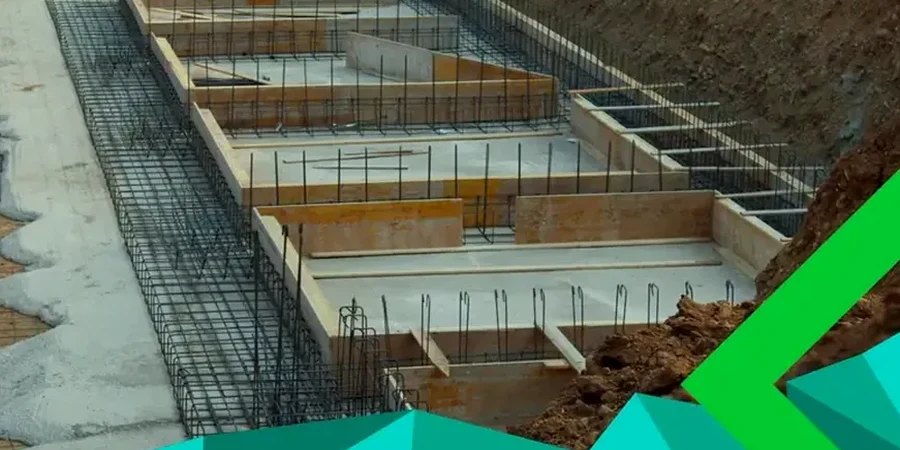
The regulatory framework governing foundations in Los Angeles is rigorous and multilayered. All projects must comply with the California Building Code (CBC), which incorporates and often exceeds International Building Code (IBC) standards with state-specific seismic provisions. The City of Los Angeles Department of Building and Safety (LADBS) enforces additional local amendments through the Los Angeles Municipal Code, including strict hillside grading regulations and foundation inspection requirements. For deep foundations, the CBC Chapter 18 and ACI 318 standards govern concrete design, while AISC specifications apply to steel piles. The California Geological Survey provides seismic hazard zone maps that dictate when site-specific ground motion analyses and liquefaction assessments become mandatory. These regulations ensure that every foundation design in piles meets minimum factors of safety against bearing failure, excessive settlement, and seismic collapse.
This category serves a diverse range of project types across the Los Angeles landscape. High-density residential developments in areas like Koreatown and Hollywood frequently require deep foundations to transfer loads through weak surficial soils to competent bearing strata. Hillside custom homes in Beverly Hills, Studio City, and Pacific Palisades demand specialized pile foundation engineering to resist sliding and overturning on steep grades. Infrastructure projects including freeway bridges, retaining walls along the Arroyo Seco, and water treatment facilities in the coastal plain all depend on robust foundation systems designed for 50 to 100-year service lives. Even smaller commercial and industrial buildings in the Inland Empire corridor benefit from value-engineered foundation solutions that balance performance with constructability.
¿Necesita una evaluación geotécnica?
Respuesta en menos de 24h.
La forma más rápida de cotizar
Available services
Q&A
What are the most common types of foundations used in Los Angeles construction?
The most common foundation types in Los Angeles include shallow spread footings for stable, flat sites with competent bearing soils; post-tensioned slab-on-grade systems for residential construction in expansive soil areas; drilled cast-in-place piles and driven piles for deep foundation applications where weak or liquefiable soils overlie competent strata; and mat or raft foundations for high-rise buildings requiring uniform settlement control and seismic resistance.
How do seismic requirements affect foundation design in Los Angeles?
Seismic requirements fundamentally shape foundation design through mandatory lateral force-resisting systems, soil-structure interaction analyses, and liquefaction mitigation measures. The California Building Code requires foundations to resist both inertial forces from the superstructure and kinematic forces from ground movement. Deep foundations must often extend below potential liquefaction zones, while shallow foundations may require ground improvement techniques such as stone columns or deep soil mixing to maintain bearing capacity during earthquakes.
What geotechnical investigations are required before designing a foundation in Los Angeles?
A comprehensive geotechnical investigation typically includes exploratory borings or test pits to characterize subsurface stratigraphy, standard penetration testing and cone penetration testing for soil strength parameters, laboratory testing for consolidation and expansion potential, groundwater monitoring, and seismic hazard evaluation including liquefaction and slope stability analyses. The LADBS requires these investigations for most projects, with the scope dictated by building size, location within seismic hazard zones, and site complexity.
How do expansive soils in Los Angeles impact foundation selection?
Expansive soils, common in the foothill areas and alluvial deposits across Los Angeles, undergo significant volume changes with moisture fluctuation, potentially causing differential heave and foundation distress. Mitigation strategies include deepened footings below the active zone of moisture variation, moisture barrier systems, chemical soil stabilization with lime or cement, and structurally reinforced slab systems. Post-tensioned slabs and pier-and-grade-beam foundations are frequently specified to accommodate anticipated soil movement while maintaining structural integrity.