Ensayos in situ represent a cornerstone of modern geotechnical engineering, providing direct measurements of soil and rock properties at their natural location. In Los Angeles, a city shaped by seismic forces and complex terrain, these tests are not merely procedural steps but essential tools for risk mitigation. They allow engineers to assess ground conditions beyond the limitations of laboratory samples, capturing the true behavior of materials under existing stress, moisture, and structural conditions. From the compacted fills of the San Fernando Valley to the cemented soils of the Hollywood Hills, understanding the ground's response to load, vibration, and water is critical for public safety and project longevity.
The geological diversity of Los Angeles makes in situ testing particularly vital. The region is a mosaic of young alluvial deposits, ancient marine sediments like the Fernando and Puente formations, and weathered crystalline rocks. Superimposed on this are active faults and significant liquefaction zones, especially near the Los Angeles River and coastal plains. A site in Downtown LA underlain by dense alluvium demands a different investigative approach than a hillside project on decomposed granite. In situ methods bridge this gap, quantifying parameters like bearing capacity, settlement potential, and lateral earth pressures directly where these geological complexities exist, reducing the uncertainty inherent in empirical correlations.
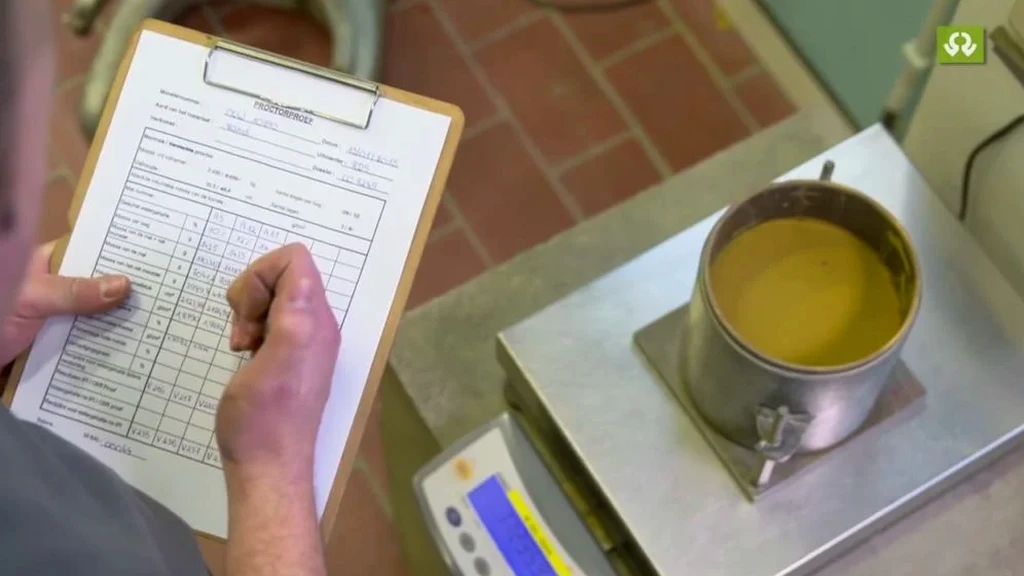
Local regulations heavily mandate in situ testing to ensure structural resilience. The field density test (sand cone) is a prime example, routinely required by the Los Angeles Department of Building and Safety (LADBS) to verify compaction of engineered fills per la normativa técnica aplicable standards. The California Building Code (CBC), which adopts and amends the IBC, ties allowable foundation pressures and deep foundation design to site-specific exploration. For seismic design, ASCE 7 and the CBC reference in situ Standard Penetration Test (SPT) N-values and shear wave velocity measurements to classify seismic site class, directly influencing the design base shear a structure must resist. Compliance with these codes is non-negotiable for plan check approval.
The scope of projects requiring these investigations is vast. High-rise developments in Century City rely on in situ pressuremeter tests and downhole seismic surveys to design deep foundations that transfer loads to competent strata. Infrastructure projects, like the expansion of the Metro rail system, depend on continuous in situ methods to assess ground loss and face stability for tunnel boring machines. Even residential construction on sloped lots requires rigorous compaction testing to prevent differential settlement and slope instability. For any earth-retaining structure or deep excavation, monitoring lateral deflections via inclinometers ensures that adjacent properties are protected, a critical concern in densely built neighborhoods.
¿Necesita una evaluación geotécnica?
Respuesta en menos de 24h.
La forma más rápida de cotizar
Available services
Q&A
What is the primary purpose of performing in situ tests instead of just laboratory tests on soil samples?
In situ tests measure soil properties in their natural state, preserving stress conditions, moisture, and fabric that are disturbed during sampling. This provides a more reliable assessment of mass behavior, particularly for sensitive clays, sands prone to liquefaction, or fractured rock, where lab tests on small, intact specimens may not represent the ground's true performance under load or seismic shaking.
How does the Los Angeles seismic environment influence the selection of in situ testing methods?
The high seismicity necessitates quantifying dynamic soil properties. Methods like downhole seismic or Cone Penetration Testing with seismic modules (SCPTu) are crucial to determine shear wave velocity for seismic site classification. This data directly feeds into structural design per the California Building Code, influencing the design spectral accelerations and foundation demands to resist earthquake forces.
What are the key local regulations in Los Angeles that mandate in situ soil testing for construction?
The Los Angeles Department of Building and Safety (LADBS) enforces the California Building Code, which requires a geotechnical investigation with in situ testing for most structures. Grading permits mandate compaction verification through field density tests per la normativa técnica aplicable standards. Foundation and shoring designs must be supported by site-specific data, such as SPT N-values or shear strength from in situ tests, to obtain plan check approval.
How do in situ tests help mitigate risks associated with the variable geology found across Los Angeles?
Los Angeles's geology shifts from hard rock to soft alluvium and liquefiable fills over short distances. In situ methods like the Standard Penetration Test or Cone Penetration Test provide continuous or discrete profiles, precisely identifying layer boundaries, weak zones, and groundwater. This high-resolution characterization allows engineers to tailor foundation solutions to specific subsurface transitions, preventing unexpected settlements or failures.