Slope engineering in Los Angeles represents one of the most critical disciplines in geotechnical practice, encompassing the analysis, design, and stabilization of both natural hillsides and man-made excavations. This category covers everything from initial site characterization and geologic hazard assessment to the implementation of retention systems that protect property and lives. In a region defined by the Santa Monica Mountains, Hollywood Hills, and numerous canyon developments, the integrity of slopes directly affects residential communities, transportation corridors, and public infrastructure. The complexity of local topography demands specialized expertise that integrates structural engineering with a deep understanding of Southern California's dynamic landscape.
The geological setting of Los Angeles creates uniquely challenging conditions for slope design. Much of the hillside terrain consists of the Miocene-age Monterey and Modelo Formations, characterized by interbedded shales, siltstones, and sandstones that are prone to differential weathering and bedding-plane failures. Ancient landslides are widespread across the Palos Verdes Peninsula, Elysian Park, and the Santa Monica Mountains, often reactivated by seasonal rainfall or seismic events. The region's Mediterranean climate intensifies these risks, with prolonged dry periods followed by intense winter storms that saturate soils and dramatically reduce effective stress along potential failure surfaces. Additionally, the proximity of numerous active faults, including the Hollywood, Santa Monica, and Raymond faults, introduces seismic coefficients that must be rigorously accounted for in any stability analysis.
Regulatory compliance in Los Angeles is governed by some of the most stringent grading and hillside ordinances in the United States. The Los Angeles City Building Code Chapter 70 governs excavation and grading, while the County's Department of Public Works enforces additional requirements for hillside construction. All slope designs must adhere to the California Building Code (CBC), which incorporates seismic provisions based on ASCE 7-16 and site-specific ground motion criteria. Critical structures require peer review by certified engineering geologists and geotechnical engineers, particularly when slopes exceed 1.5:1 gradients or involve cut heights greater than 15 feet. The City's Hillside Construction Regulation also mandates comprehensive análisis de estabilidad de taludes that demonstrate minimum factors of safety of 1.5 for static conditions and 1.1 for pseudostatic seismic loading, ensuring developments can withstand both seasonal saturation and design-level earthquakes.
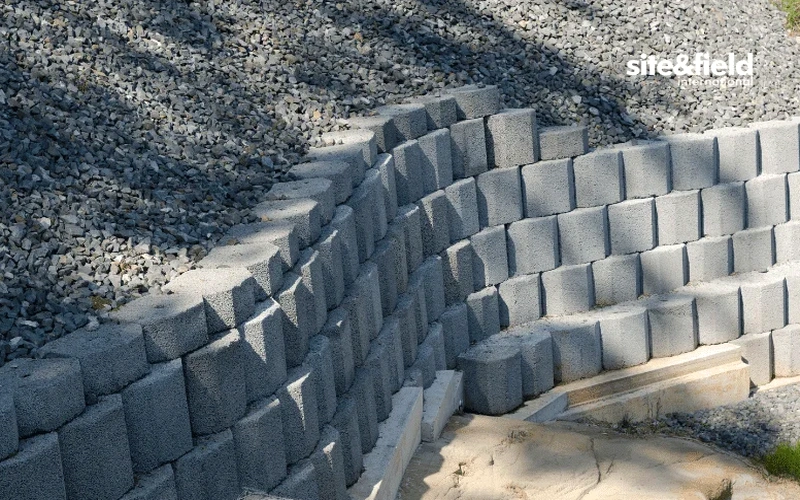
The types of projects requiring slope engineering services span the full spectrum of urban development in Los Angeles. Luxury residential construction in Bel Air and the Hollywood Hills frequently involves deep cuts into bedrock and engineered fill slopes exceeding 40 feet in height. Infrastructure projects such as the Metro transit expansions and hillside road widenings demand sophisticated diseño de muros de contención to maximize usable space while maintaining slope stability. Commercial developments in areas like Universal City and the Getty Center have required unprecedented retention systems combining soldier piles, tiebacks, and reinforced earth. For existing structures threatened by slope movement, diseño de anclajes activos y pasivos often provides the most effective remediation, transferring loads to competent strata below weathered surficial materials. Each project type presents distinct challenges that demand tailored approaches to drainage, reinforcement, and long-term monitoring.
¿Necesita una evaluación geotécnica?
Respuesta en menos de 24h.
La forma más rápida de cotizar
Q&A
What factors most commonly cause slope failures in Los Angeles?
Slope failures in Los Angeles typically result from a combination of steep terrain, weak sedimentary bedrock, seasonal rainfall infiltration, and seismic activity. The region's Mediterranean climate creates cycles of saturation and drying that degrade soil strength over time. Earthquakes along local faults can trigger liquefaction in sandy layers or reactivate ancient landslide deposits. Poor drainage, unregulated grading, and concentrated runoff from impervious surfaces frequently accelerate instability in developed hillside areas.
How do local building codes address slope stability requirements in Los Angeles?
The Los Angeles City Building Code Chapter 70 and the California Building Code establish minimum factors of safety for slope design, requiring 1.5 for static conditions and 1.1 for pseudostatic seismic loading. The Hillside Construction Regulation mandates geotechnical investigations, engineering geology reports, and often peer review for slopes steeper than 1.5:1 or cuts exceeding 15 feet. Site-specific ground motion analyses per ASCE 7-16 are required for critical structures, and drainage provisions must demonstrate adequate control of surface and subsurface water.
What is the difference between active and passive slope stabilization systems?
Active stabilization systems apply pre-tensioned forces to the slope to increase resisting forces immediately upon installation, with post-tensioned anchors being the most common example. Passive systems, such as soil nails, drilled shafts, or gravity walls, develop resistance only as the slope begins to deform and mobilize the reinforcement. Active systems are typically specified when movement must be arrested or prevented entirely, while passive solutions are often more economical for new cuts where controlled deformation is acceptable during construction.
How long does a typical slope stabilization project take from investigation through construction?
The timeline varies significantly based on project complexity, but a typical hillside stabilization in Los Angeles requires 4 to 8 weeks for subsurface investigation and laboratory testing, followed by 6 to 12 weeks for engineering analysis and design. Agency review, particularly when peer review panels are involved, can add 4 to 10 weeks. Construction duration depends on access constraints and the chosen stabilization method, with anchored wall systems often requiring 3 to 6 months for substantial completion on a single slope face.