In the dynamic landscape of Los Angeles construction and civil engineering, a geotechnical laboratory serves as the foundational backbone for safe and compliant development. This category encompasses the rigorous testing and analysis of soil and aggregate materials to determine their physical and engineering properties. From the bustling high-rises of Downtown LA to the sprawling residential developments in the San Fernando Valley, understanding subsurface conditions is not just a regulatory requirement—it is a critical safeguard against the region's unique seismic hazards. A comprehensive laboratory testing program, including essential services like análisis granulométrico, provides the quantitative data engineers need to design foundations, retaining walls, and pavements that will perform reliably for decades.
The geological complexity of Los Angeles demands a specialized approach to laboratory testing. The city sits atop a mosaic of formations, including the soft alluvial deposits of the Los Angeles Basin, the expansive clay soils common in areas like Baldwin Hills, and the weathered bedrock of the Santa Monica Mountains. These diverse conditions directly influence soil behavior, particularly its bearing capacity, settlement potential, and reaction to moisture. Without accurate laboratory classification, projects risk differential settlement, slope instability, or structural distress, especially given the proximity to active fault systems like the San Andreas and Puente Hills. Testing protocols must account for these local soil characteristics to mitigate the inherent risks of building in a seismically active metropolis.
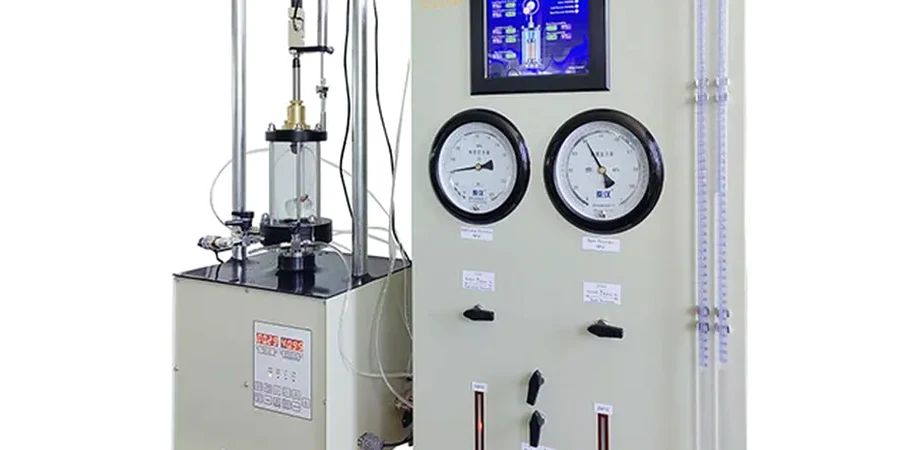
Adherence to stringent regulatory standards governs every aspect of geotechnical laboratory work in Los Angeles. The California Building Code (CBC), specifically Chapter 18 on Soils and Foundations, mandates thorough subsurface investigations and laboratory analysis for most structures. These local amendments work in concert with nationally recognized standards from la normativa técnica aplicable International, such as D422 for particle-size analysis and D4318 for determining soil consistency through límites de Atterberg. Additionally, the City of Los Angeles Department of Building and Safety (LADBS) often requires special inspection and testing reports that strictly follow these protocols, ensuring that laboratory results are legally defensible and technically sound for permitting and liability purposes.
The range of projects that necessitate a professional geotechnical laboratory is vast and touches every corner of the region's infrastructure. High-density residential and commercial developments require extensive foundation analysis, while public works projects like the Metro rail expansions rely on precise soil characterization for tunneling and station excavation. Hillside construction, prevalent in areas like Echo Park and Silver Lake, demands detailed shear strength and consolidation testing to design stable slopes and deep foundations. Even smaller-scale ventures, such as swimming pool installations or ADU construction, trigger the need for basic soil classification and compaction reports. In every case, the laboratory provides the empirical evidence that transforms site geology into a predictable engineering material.
¿Necesita una evaluación geotécnica?
Respuesta en menos de 24h.
La forma más rápida de cotizar
Q&A
What is the primary purpose of a geotechnical laboratory in Los Angeles construction?
Its primary purpose is to classify and measure the engineering properties of soil and rock to ensure safe structural design. In Los Angeles, this is critical due to seismic risks and variable local geology. Laboratory data on strength, compressibility, and expansion potential allows engineers to design foundations that resist earthquakes and prevent settlement, directly complying with California Building Code mandates.
Which local regulations require soil laboratory testing for development projects in LA?
The California Building Code Chapter 18 and local LADBS amendments require laboratory testing for most construction. Standards like la normativa técnica aplicable for particle-size analysis and la normativa técnica aplicable for Atterberg limits are typically mandated. These regulations ensure that foundation and grading designs are based on verified soil properties, and special inspection reports must include certified lab results for permit approval.
How do Los Angeles basin soils affect the type of laboratory tests needed?
The basin's alluvial and marine deposits often contain fine-grained, compressible, or expansive layers. This necessitates specialized testing beyond basic classification, such as consolidation tests for settlement prediction and expansion index tests for clay. Hillside areas with weathered bedrock require shear strength analysis, making a tailored laboratory program essential to address the specific failure mechanisms of each geological unit.
What is the typical turnaround time for a complete soil laboratory testing suite?
Turnaround varies with project scope and soil type, but a standard suite including visual classification, gradation, and Atterberg limits typically takes 5 to 7 business days. More time-intensive tests like consolidation or direct shear can extend the timeline by one to two weeks. Rush services are often available to meet critical construction deadlines, with scheduling coordinated upfront.